Post-production is the third and last portion within film-making stage
The Post-Production process comprises expert editors, sound engineers, foley artists, colorists, and more. Some conventional systems are universal over television, features, and other visual mediums.
However, it is essential to perceive the scope of the project, its budget, and which arena you’re in (television, film, or even video games), the Post-Production process will vary.
Post-Production refers to all of the tasks linked with cutting raw footage, assembling that footage, adding music, dubbing, sound effects.
EDITING
On its most primal level, film editing is the art, technique, and practice of gathering shots into a logical sequence. The responsibility of an editor is not only to mechanically put pieces of a film together, split off film slates or alter dialogue scenes Editors usually strike a dynamic role in the production of a film.
It was Francis Ford Coppola who stated, “The essence of cinema is editing.” If you’re an aspiring film editor, you know your craft matters — and you know it also matters how you speak and think about your craft.”
Cut
A transition where one shot is directly followed by another.
Sequence Editing
Visual editing where shots are cut together in a precise and narrow flow of continuous action. This type of cutting attempts to maintain a constant sense of time and space.
Cross-Cutting
The procedure used to give the image that two storylines of action are occurring at the same time by quickly cutting back and forth between them.
Cutaway
The suspension of a continuously shot action with a shot that’s peripherally linked to the primary action.
Dissolve
When the end of one shot overlays the start of the next one to produce a progressive scene transition.
Eyeline Match
A technique based on the view that observers want to perceive what on-screen characters are seeing.
Fade
A visual effect used to symbolize a shift in place and time. This comprises a gradual brightening as a shot starts or a progressive darkening as the shot goes black or to another color.
Iris
A wipe that holds the shape of a contracting or growing circle, depending upon the scene whether it is opening or ending.
J Cuts
An editing technique that enables the audience to first hear audio from a shot, and then sees it.
Jump Cut
A short cut that creates a lack of connection between shots by leaving out parts of the action.
L Cut
An editing changeover between one shot and another in film, where the visual and audio change at distinct timings.
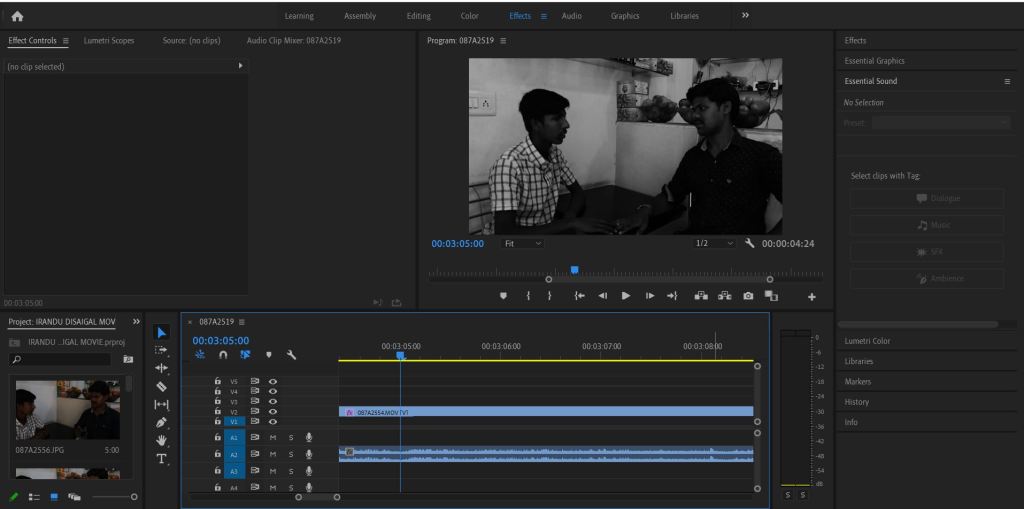
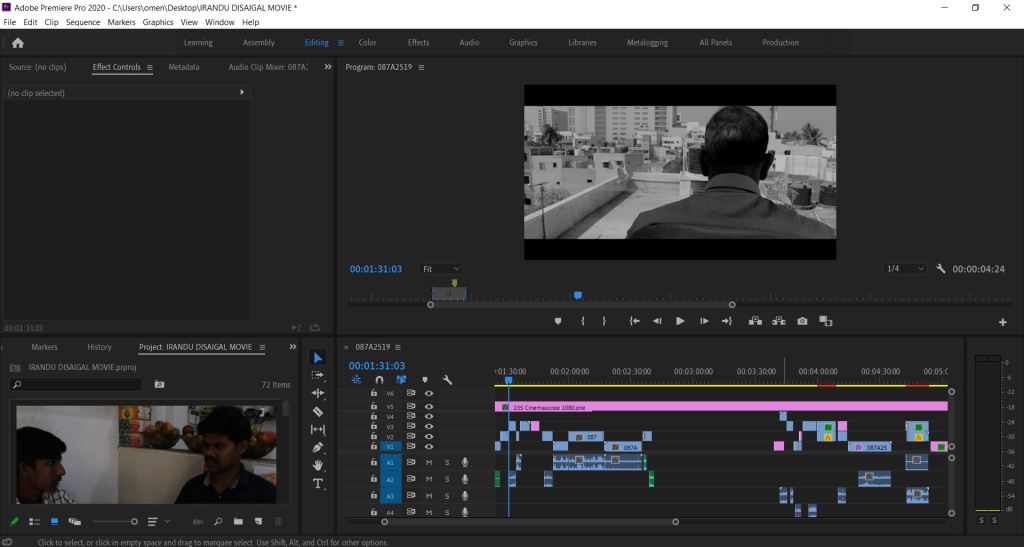
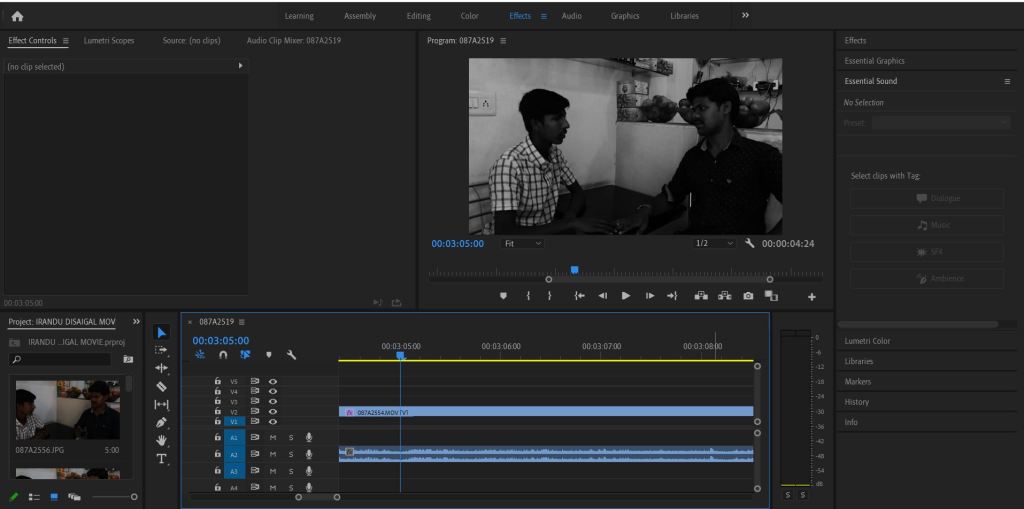
I utilized premiere pro to edit my raw footages by adding transitions, sounds, and color grading.
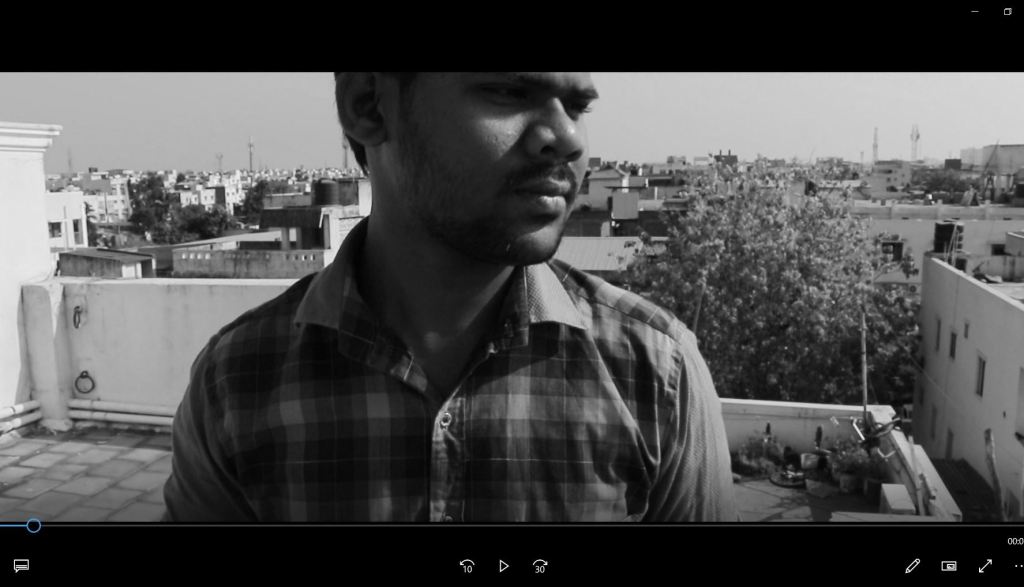
I previously used the same software in my As level coursework and it was sort of simple to operate on. I did not record live audio therefore I had to dub for dialogues and my relatives helped me on dubbing. The software provided multiple possibilities of creating own title, color grading and adding sounds it was very more straightforward too, In this A levels I wanted the screenplay to be peculiar therefore I kept the flashbacks in black and white because From German expressionism to film noir, black and white films have shifted the limits of movie-making.black and white turns a movie thematically, accommodating atmosphere, tone, and visually presenting abrupt contrasts and a dreamlike landscape of the world.
PROMOTING
Film promotion. … As with all businesses, it is an essential component of any release because of the internal high financial risk; film studios will invest in expensive marketing campaigns to maximize profits early in the release period. Marketing funds tend to comprise about half the production budget.
Types of promotion
Theater -Film posters
Television and radio
Internet
Merchandising
Promotional tours and interviews
POSTERS
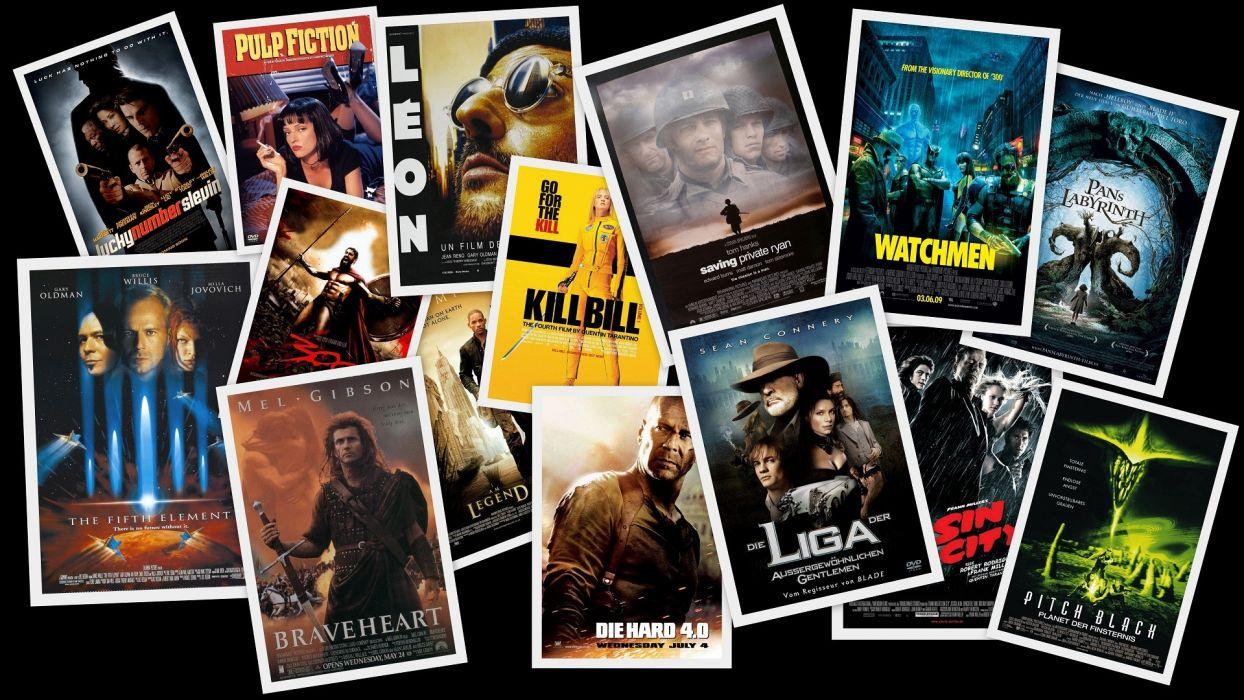
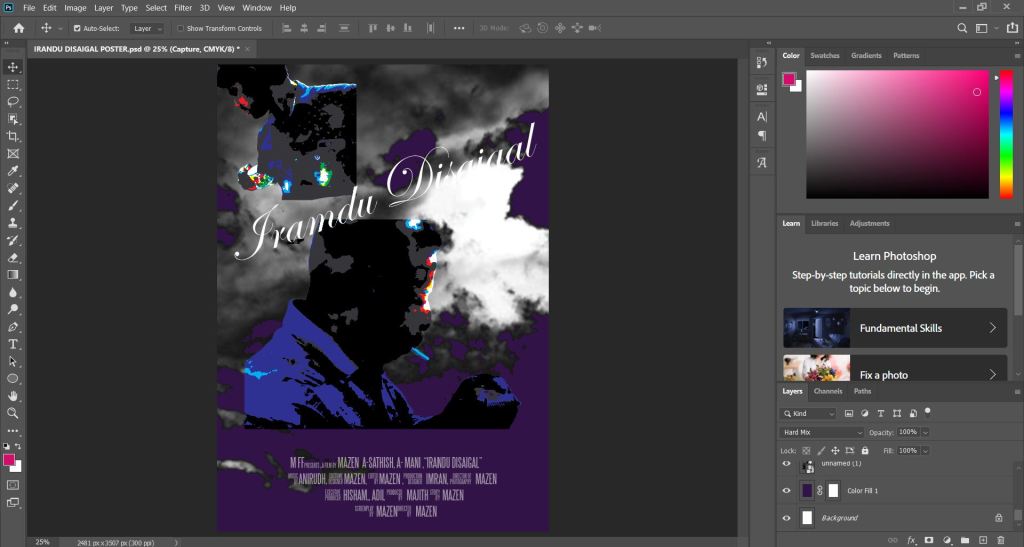
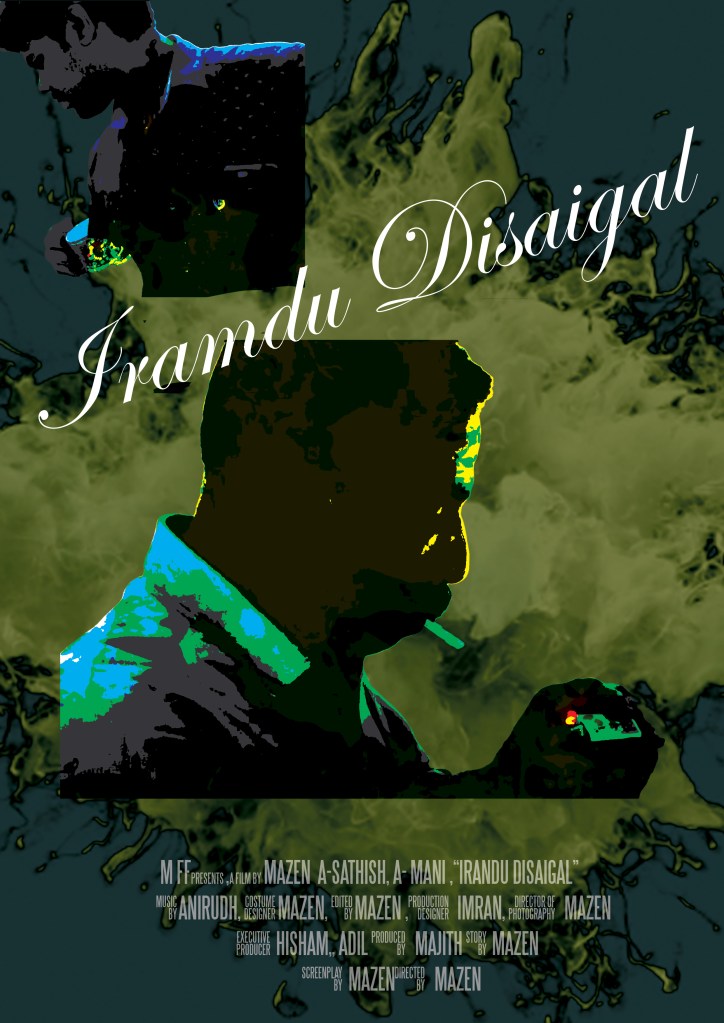
A film poster is a poster utilized to promote and advertise a film primarily to convince paying customers into a theater to see it. Studios frequently print numerous posters that vary in size and content for numerous domestic and international markets. They normally contain a model with text. Today’s posters often feature imprinted likenesses of the main actors.
Before the 1980s, illustrations alternatively to photos were far more prevalent. The text on film posters normally holds the film title in large lettering and frequently the names of the foremost actors. It may also hold a tagline, the name of the director, names of characters, the release date, and other relevant details to inform the proposed viewers about the film.
Film posters have continued to be managed since the most initial public exhibitions of film. They originated as outside posters listing the program of (short) films to be displayed inside the hall or movie theater. Film posters have become frequently wanted by art collectors in recent years due to their obvious relative rarity.
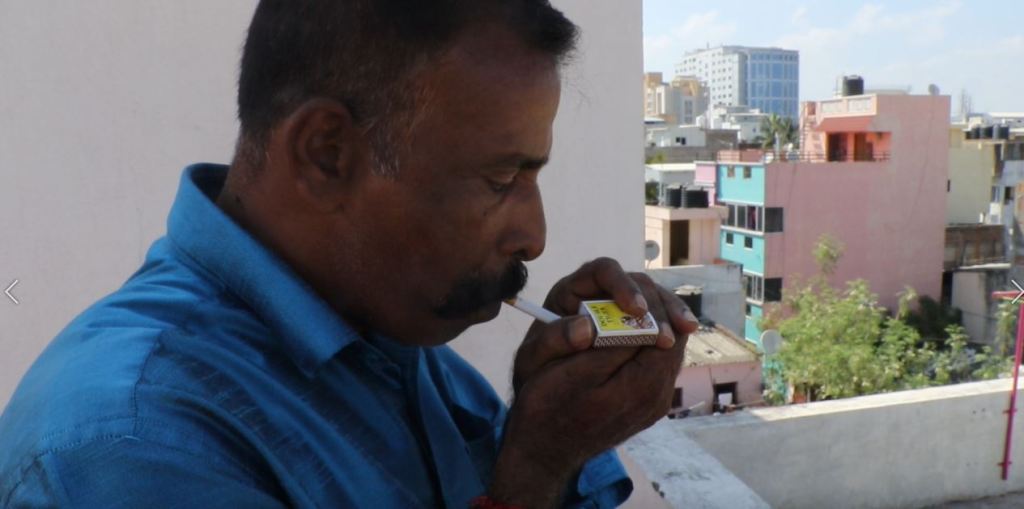
Three steps of editing

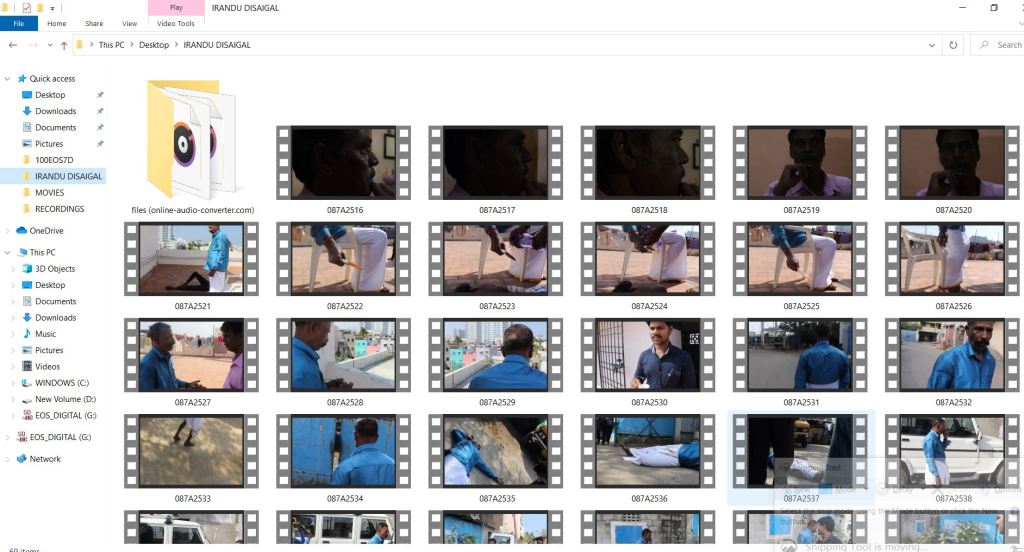
LOGGING
Logging is in the region of the assistant editor. In film making and television production, it’s common for the number of footage shot to be several times lengthier than what will be used on the final cut. To avoid losing time searching for particular source shots, the very first stage of post-production requires the assistant editor sorting all the raw, unedited footage so that they’re correctly labeled, organizing all the footage so that the editor can work more efficiently to cut To support the editor.
THE EDITORS CUT
The editor’s first major job is to start assembling the footage in an arrangement that flows smoothly story-wise. This comprises selecting all the best audio and visual material from the dailies and utilizing them to put together each scene. Today’s’ big films normally have an editor doing this even when filming is still getting set
THE DIRECTORS CUT
During filming, the director will try getting time to connect with the editor and allow his suggestions. But once shooting has concluded, the director can then concentrate solely on working with the editor to perfect the cut of the film.
FINAL CUT
Once the editor, producer, and designer are happy with the current cut, the sound, music, and title designers will add to the edit. Later music and sound effects are added to the cut and everyone is satisfied, it is given to an exact copy to be produced. This final cut is whatever people across the globe will view on their theater and television screens.